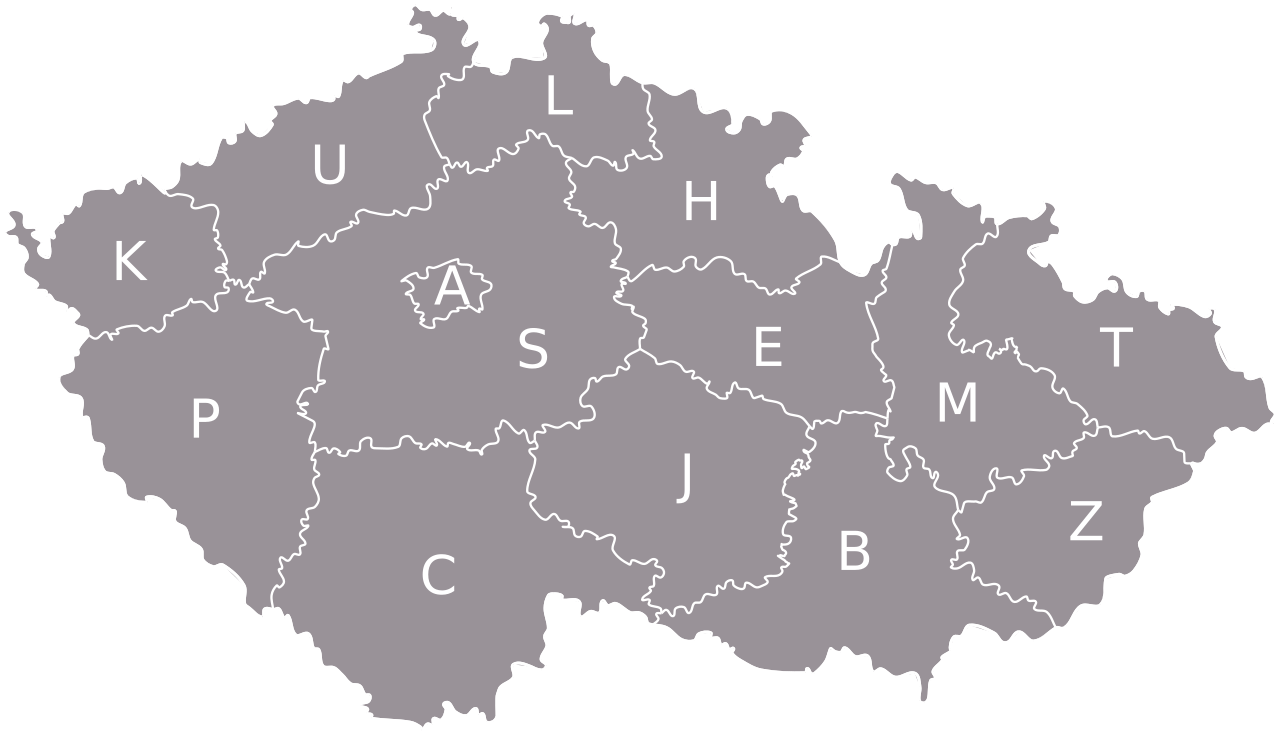
Beyond Borders: Unpacking the Identity of Each Region Of Czechia
When we talk about the Region Of Czechia, it's easy to conjure images of maps crisscrossed by administrative boundaries. However, the true essence of Czechia's regions extends far beyond mere lines on paper. It delves into a rich tapestry of history, cultural identity, local development, and even the very names by which these areas are known. Understanding these denominations is key to appreciating the nation's diverse character and its ongoing evolution. This article explores how regional names in Czechia are not just labels, but powerful symbols that reflect territorial distinctiveness, historical legacies, and the aspirations for future development.
The Evolving Definition: From Static Category to Dynamic Identity
For decades, the concept of a "region" was often treated as a fixed, objective category – a geographical area defined by its administrative function or physical attributes. However, since the 1980s, a significant paradigm shift has occurred, especially within academic discourse. Scholars and planners now increasingly view the region not as a static object, but as a dynamic social process. This contemporary understanding requires a holistic approach, blending insights from geography, history, sociology, and economics, all while maintaining a deep sensitivity to local nuances.
In this new light, a region is deconstructed through a combination of three interconnected configurations:
- Territorial Configuration: This refers to the physical boundaries, geographical features, and spatial relationships that define an area.
- Symbolic Configuration: This encompasses the shared meanings, narratives, myths, and perceptions associated with a region, often encapsulated in its name and iconography.
- Institutional Configuration: This involves the administrative structures, governance bodies, and local action groups that operate within and shape the region.
Crucially, regional identity permeates all these layers. It's the unifying thread that gives a region its distinct character, fosters a sense of belonging among its inhabitants, and plays an indispensable role in its recognition within the broader national system. Without a strong, discernible identity, a region risks becoming an anonymous space, lacking the cohesion necessary for sustained development.
Names as Narratives: Decoding Czechia's Regional Naming Strategies
The names of Czechia's regions offer a fascinating window into this complex interplay of identity and development. A compelling case study comes from the examination of Local Action Groups (LAGs) – grassroots initiatives focused on rural development. An analysis of 179 LAG names in Czechia revealed that naming strategies are far from uniform; they are spatially fragmented, yet they consistently mirror fundamental spatial patterns traditionally present in the Czech context.
What do these names tell us?
- Historical Echoes: Many names subtly or overtly reference the historical lands of Bohemia, Moravia, and Czech Silesia, or smaller historical sub-regions. These names carry centuries of tradition, culture, and collective memory, lending a sense of authenticity and rootedness.
- Development Gradients: The names often reflect the west-east gradient of development levels across the country. More developed western regions might emphasize innovation or modern aspirations, while eastern regions might highlight natural beauty or traditional heritage, though this is a simplification and not a rule.
- Inland vs. Borderland Distinction: Names also differentiate between traditional inland areas and borderland regions, particularly those resettled after WWII. Borderland names might evoke a sense of ruggedness, new beginnings, or cross-border collaboration, whereas inland names might lean towards established communities and agricultural richness.
- Geographical Features: A significant number of names directly incorporate prominent geographical features – rivers, mountains, forests, or unique landscapes – thereby anchoring the region to its natural environment.
The significance here is profound: these naming strategies are not arbitrary. They are a deliberate expression of territorial approach towards regional denomination, designed to capture the "essence" of a place. For instance, a name like "Bohemian Paradise" (Český ráj) immediately evokes images of natural beauty and historical grandeur, effectively branding the region and setting it apart.
Practical Tip for Local Stakeholders: When developing a brand or marketing strategy for any Region Of Czechia, thoroughly research existing historical, geographical, and cultural associations. A name that resonates with the local identity and historical context will be far more effective in fostering community pride and attracting external interest than a generic or abstract one.
Identity as a Catalyst: Fueling Regional Development
The link between a strong regional identity – often reinforced by its name – and successful regional development cannot be overstated. When a region possesses a clear, widely recognized identity, it gains several critical advantages:
- Enhanced Recognition and Visibility: A distinctive name and identity make a region stand out in a crowded landscape, attracting tourists, investors, and new residents. The "Bohemian Paradise" region, for example, leverages its evocative name and unique geology to position itself as a premier tourist destination, driving local economies through hospitality, crafts, and related services.
- Community Cohesion and Pride: A shared identity fosters a sense of belonging and collective purpose among residents. This social cohesion is vital for mobilizing local communities towards common development goals, whether it's preserving heritage, improving infrastructure, or launching new initiatives.
- Strategic Branding and Marketing: Regional names become powerful tools for branding. They simplify complex information, convey values, and create an emotional connection. This is invaluable for marketing regional products, promoting tourism, and attracting foreign direct investment. Businesses looking to expand often seek regions with established identities that align with their own brand values.
- Policy Coherence and Planning: Policymakers and planners can use strong regional identities as a foundation for developing coherent strategies. Understanding what makes a region unique allows for tailored interventions that truly address local needs and leverage existing strengths, rather than imposing generic solutions.
The successful development of a Region Of Czechia is therefore not just about economic indicators; it is profoundly intertwined with its ability to articulate and embody its unique identity. Names are the shorthand for these complex identities, serving as anchors in the collective consciousness.
Actionable Insight for Developers: Before embarking on any development project, conduct a deep dive into the historical, cultural, and symbolic landscape of the target region. Engaging local communities in the naming and branding process for new initiatives can significantly increase their acceptance and long-term success, as it taps into existing regional identity and fosters ownership.
Conclusion: The Enduring Power of Names in Czechia's Regions
The names given to the various areas within Czechia are far more than mere geographical markers. They are dynamic expressions of identity, shaped by centuries of history, territorial evolution, and the aspirations of local communities. From mirroring traditional historical divisions and west-east development gradients to distinguishing between inland and borderland areas, these names serve as a powerful narrative of the Region Of Czechia. As the understanding of regions evolves from static categories to dynamic social processes, the significance of regional identity, intricately woven into its nomenclature, becomes paramount. A well-chosen name doesn't just describe a place; it helps to define it, to brand it, and ultimately, to drive its development by fostering recognition, pride, and strategic direction.